
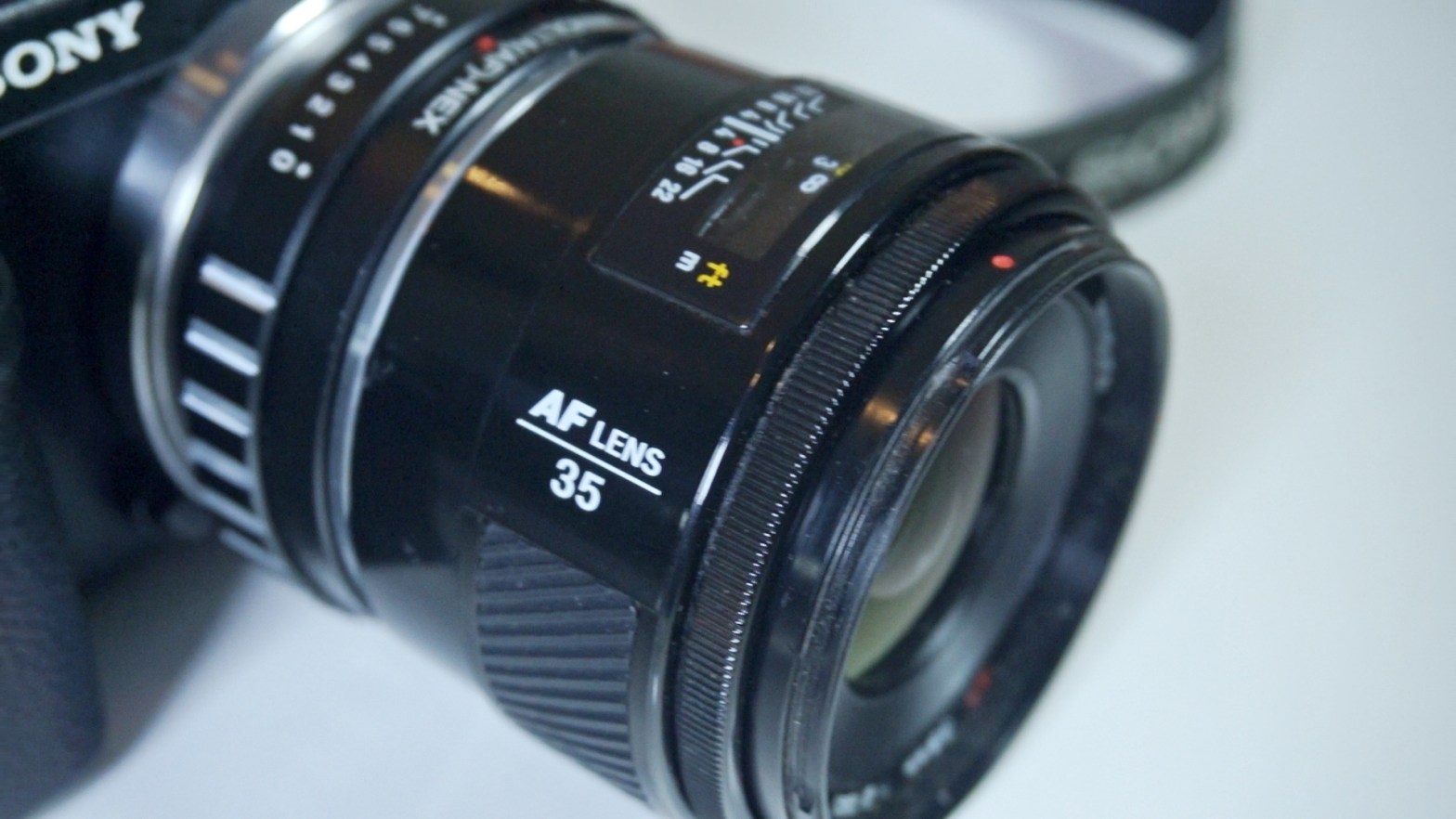
I bought this lens from ebay for Sony a100, yeah, the first dslr Sony came out with. Manufactured from 1987 to 1999 You can only quietly call this lens vintage, but I wanted to include it because it has been with me the longest. Initially I was intrigued with the possibility of using old Minolta lenses as Sony adapted the a-mount and even had ibis. It is pricey, in 2008 I paid 370€, nowadays You find them in the 400€ range. Now that’s nice! Talk about price drop. Was it and is it worth it? Let’s see.
52,5 mm equivalent on my NEX 6 is a bit more for detail hunting and maybe portraits. This lens gets You close, closest focusing distance is 19 cm! That’s right in there.
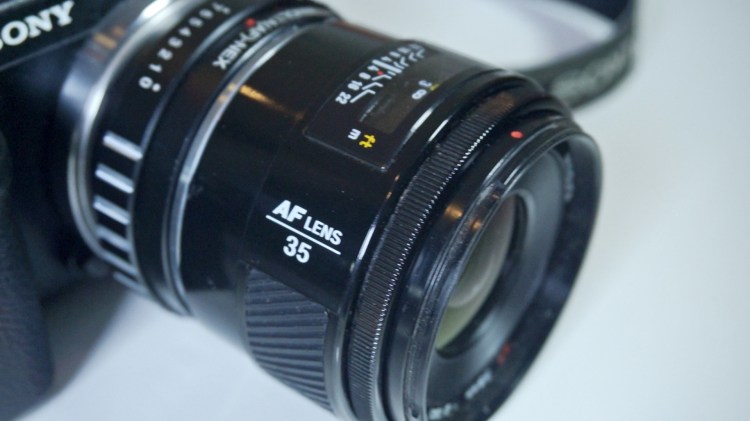
Today I use it manually, the focus is a bit tricky as the control ring is very thin. With hood attached and gloves on in colder weather focusing becomes close to impossible. Gloves off and endure the freeze is the only option.

Build feels plastic but I can testify that it is solid. Dropped, bounced and carried around the world it still works as it should.
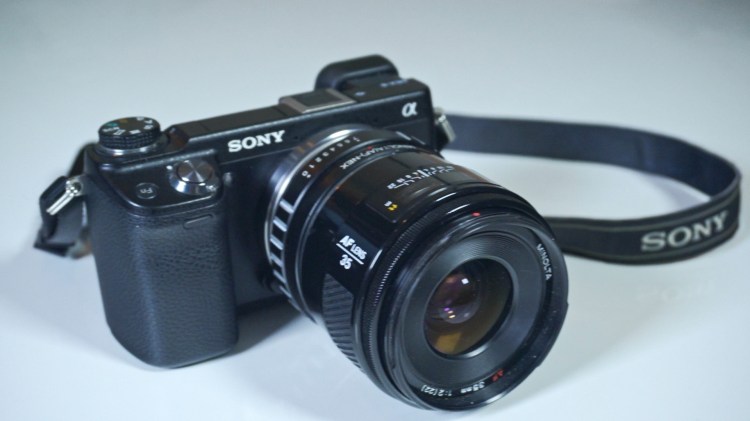
Minolta’s AF-lenses do not have aperture ring in lens. This adapter has scale of 0 to 7 for reasons I have no clue of. 0-10? Something else? I don’t know. And it goes the other way You’d think, 7 is open, 0 is closed. SO, You cannot tell what Your f-number is, only open or close or somewhere in between. As it turned out, in real life photography it does not make that much of a difference. It would be nice to know what f You have but one can live without. Photography theory applies the same nonetheless.


There is noticeable aberration in almost every aperture setting. Only clean-ish one is click number 4, which falls in the sweet spot of f5,6, maybe.
Could not find any landscape to speak of when out and about with the lens. This is as close as I got 🙂 Early morning in a harbor. Not a lot of tweaking and the colors look amazing, not hurt-Your-eyes popping but natural.

Portraits work wonders when You get the focus right, duh. Of course the focal length might not be most flattering for a facial shot. Still, the first image turned out nice, after a bit of editing. The other one, we’ll call it a moodtrait, required a bit more editing on the colors as they were originally very, very bland.


Close ups are easiest to nail. And You can get very close, which is a big plus.


Architecture can be, or not to be. 52,5 mm is tricky. You have to get some space between the subject and the lens.

Still life is where this lens shines, though that pesky focus ring can give trouble. Images look like actual photos, not like they came from some digital device.


Bokeh is pleasing but nothing spectacular.


Shooting against the sun does nothing spectacular either.

Video comes out beautiful and, depending on the subject, nailing focus per mm is usually less demanding. Video on Youtube is here.
Is it worth the price? Unfortunately, I do not think so. Images turn out rich in color and detail but I have to discard many. Very often focus is off by just a bit, but enough. Focusing ring nags me. It makes the whole shooting experience a bit awkward and cumbersome. Making sharp photo from a wide composition is tricky, in close ups it gets easier but not reliable enough. Also, even if that weird aperture control works, it feels… weird. I have started to just leave it one click from open. Color aberration is bad. Honestly. All in all, I think for manual use, this lens loses a lot though image quality is ok. When I get an image just right, it’s perfect. Mostly not. My other adapted lenses offer more in their imperfections. I have since sold this lens.
 Hill & Spruce Photography