
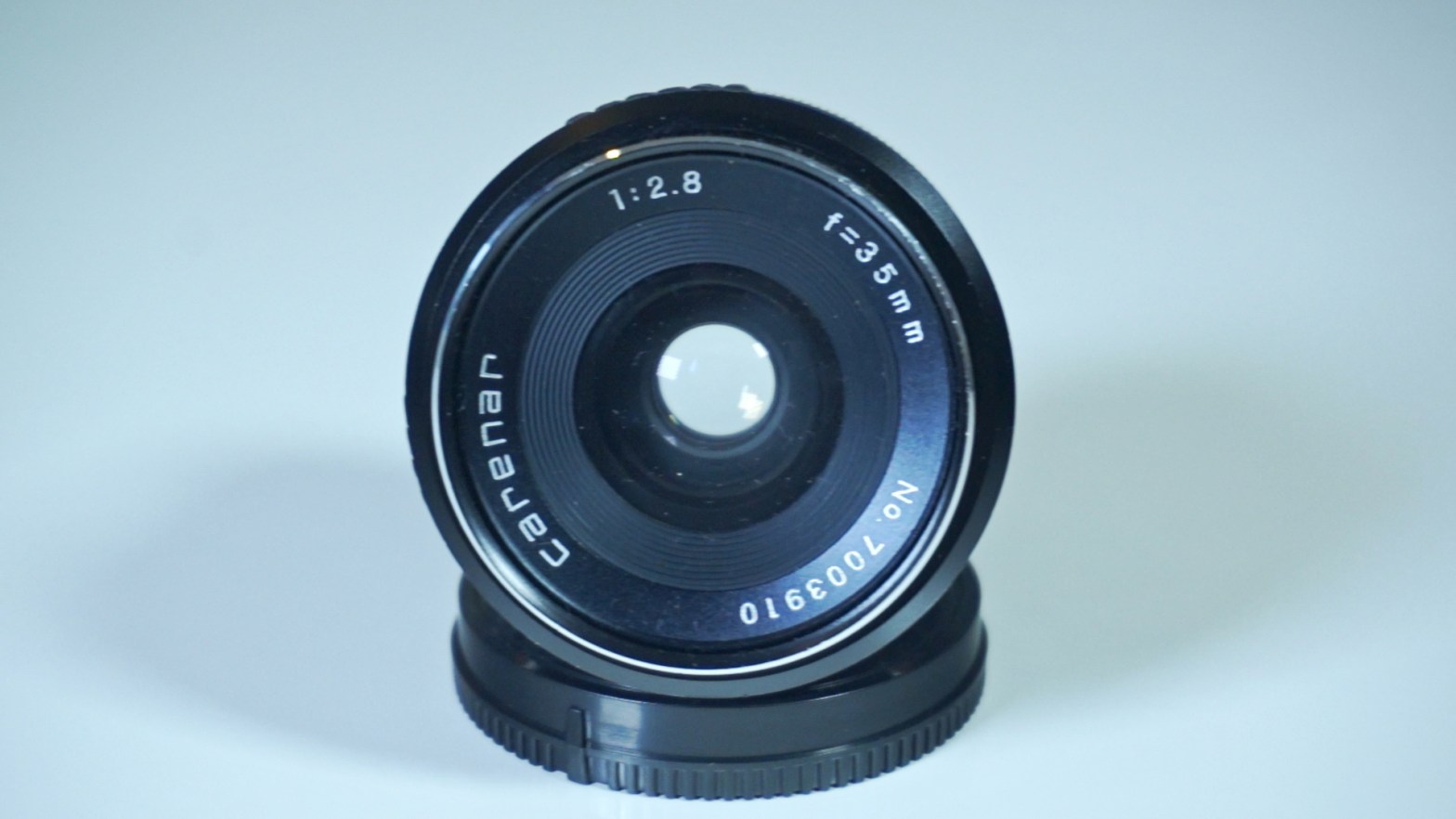
One look at this lens and I was going to skip it altogether but then I thought to myself: “why not?” It is after all vintage. If Auto Chinon f1.7 would be the renowned painter having summer residence in a small town, the Carenar would be the local farmer’s help that insists telling dirty jokes over a pint to the painter zipping fine wine in a pub after a long day at work. So I thought initially. I was wrong.
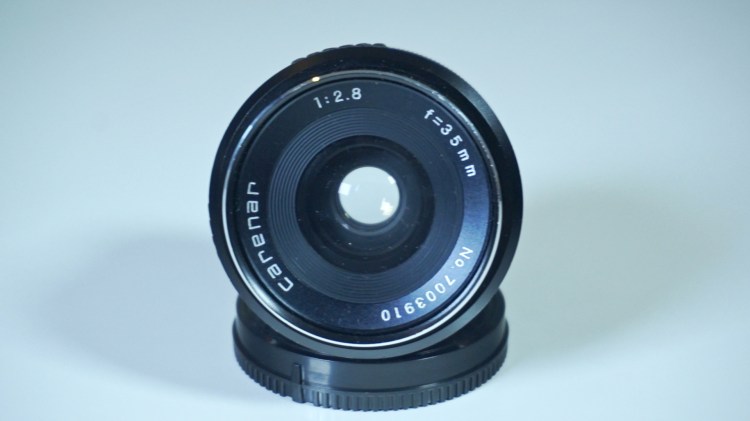
I got this lens as a loan from a friend who does not care for old lenses more than manual use of lenses. I don’t know what’s wrong with him, it is sad. On the net You can get these for 20€. That’s not much! Internet also tells us that this could be an early production from Samyang, so it will hit or miss. Evident from the rubber coating on the aperture ring, it has been used a lot!
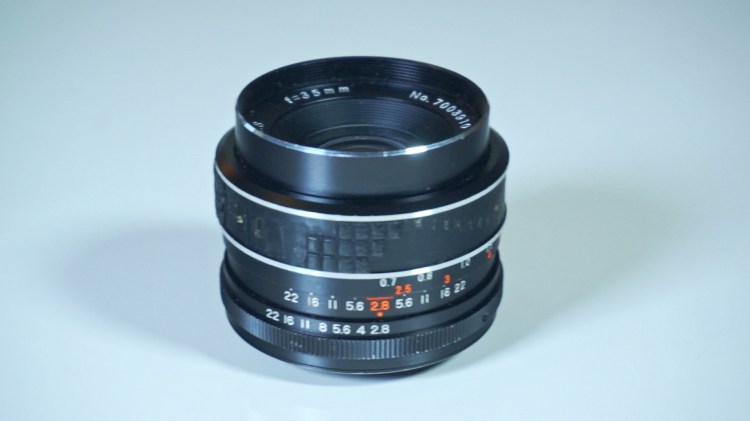
From the start, looking in Your viewfinder, You see as if something’s wrong. Though the interior of the lens is clear, the viewfinder seems smudged. It looks like anti-reflection is close to non-existing. Multi-coated? More like uncoated! Hahaa! Anyways… Whole picture is behind a veil of water. Focusing is tricky, You can make out the red ants of focus peaking from time to time but mostly You have to kinda guess. I figure it’s because edge detecting has troubles finding enough contrast. Focus magnifier is Your best friend here. Mechanics on this copy are smooth and firm.

Carenar is never really sharp. The corners never catch up. It’s almost the same on all apertures. Now that’s weird.


UPDATE ONE WEEK AFTER
Or is it? After a bit of pondering I thought that the change in depth of field when upping the aperture is physics. So it should not be possible to build a lens where You change the aperture but the depth of field stays the same given You do not move? No, it’s not. I totally forgot about that aperture pin! This lens does not have A-M switch and seems not to be rigged. Apparently the adapter is not quite tight enough to press the pin. The blades move with f4 but after that, nothing. LOL, live or learn. Or and. Whatever. I shot away happily nevertheless. I’ll pin that pin and check the sharpness in another update.
UPDATE TWO WEEKS LATER
I pinned that pin to f11 and shot with Sony a7r.


Behavior is weird. I checked and double checked that the iris blades have in fact been moving. Depth of field is very, very erratic. Some bad lens design? Also, in the first image of the trees You can clearly see soft and poorly rendered edges. On NEX 6 the aps-c sensor might be a bit forgiving. So, in iq bad, in output, interesting… I like it!
BACK TO TRACK
Landscape is where the Carenar shines. Edited to taste You can create amazing colors with very small effort. For some splendid reason the flaring, ghosting and veiling benefit excellent tone reproduction! Who would have guessed? Not me. Notice the difference in tonal softness, depending on the angle to the sun. One of the lovely aspects of shooting with vintage glass. First three images shot within an hour apart after sunrise.


Portraits come out colorful and reasonably sharp, or should I say sharp enough. Sharpness is relative in many occasions. Tack sharp, that is technically perfect or sharp in relation to the image. The latter applies here and delightfully, I might add.


You cannot get too close. That’s a shame but just something You evaluate when picking up Your lens for the day. Besides closer than this and one might notice that the lens cannot produce enough resolution or iq. Perfect balance?


At 52,5mm with aps-c sized sensor when shooting buildings, You know the deal. Find small buildings.


Snapping away reveals a few things. Corners are very vulnerable to diffraction type optical effect, even with open apertures. Shoot accordingly and You get very pleasing images.


Bokeh is quite sharp, it never gets… obscure, for the lack of a better word. Mostly I don’t mind. Images build together nicely even so. On the second image we have closest focus, veiling and out of focus area. On a whole it comes out charming.


Pointing the lens against the sun provides fun opportunities for framing an object or painting part of the image with color.


Thanks to the qualities of the glass, ie. lack of sharpness, video works well. Review on Youtube here.
UPDATE SONY A7R
Full frame keeps those magnificent colors. Nailing focus, it is sharp in the center even at f2.8. Which is it’s best aperture. Those weird corners give plenty to play with.


So, what’s the verdict? Images come out engaging with a definitive vintage flair. You get mostly keepers because You are required to place Your composition quite carefully. I was very surprised with the colors this lens produces.
One more thing I like about the Carenar are the flares. They’re colorful, rich, vivid, beautiful. I wish I could get these with my Helios for example. Alas, it all comes down to that strange coating that brings back a piece of lost soul to photography. It can be fun to shoot with this lens, knowing what it does. In my opinion, works best with a smaller sensor. Full frame reveals the lenses defects in all their glory. Not in a good way. Take it where-ever, use it however. Something surprising always turns up. Vintage at it’s best.
 Hill & Spruce Photography